
In March 2025, a London pet hospital received three consecutive cases of salmonella infection caused by raw dog food. The “natural and additive-free” raw dog food, priced three times higher than regular dog food, failed to ensure pet food safety. This is a common dilemma in the European and American raw dog food market. As the concept of “scientific pet care” sweeps the globe, raw dog food has become the fastest-growing category in the high-end pet food market due to its alignment with dogs’ carnivorous nature. However, balancing pet food safety and nutrition in raw dog food has become a tough challenge for the industry.
The “Fatal Temptation” of Raw Dog Food
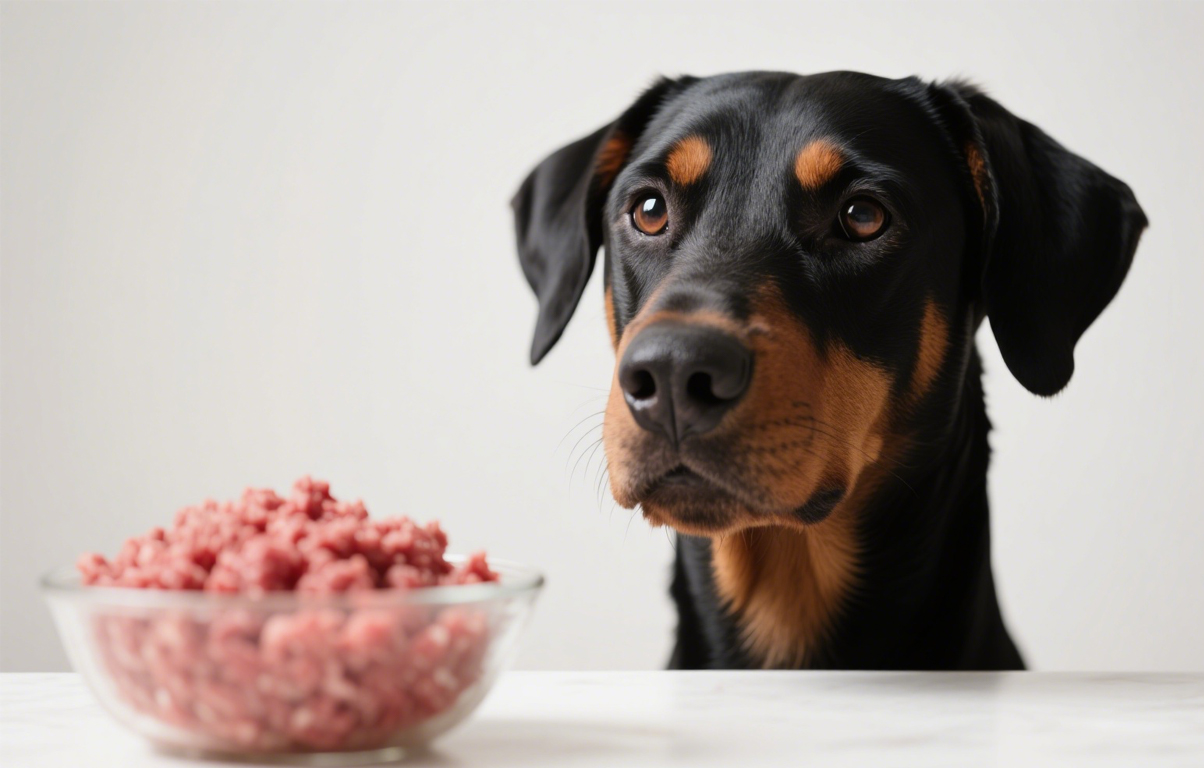
The raw dog food industry faces three severe challenges. Microbial contamination is the biggest threat to pet food safety. FDA 2024 data shows 34% of pet food recalls stem from salmonella/listeria contamination – raw dog food products account for over 70%. These pathogens cause acute diarrhea in pets and may infect humans. Traditional thermal sterilization damages nutrition: temperatures >80°C destroy proteases/immunoglobulins, reducing protein digestibility by 40%. The resulting “cooked odor” causes 30% pet rejection – wasting investment in raw dog food.
Genetic Defects of Traditional Processes
The root problem lies in conflicts between processing methods and biological materials. Salmonella embeds deep in muscle fibers, evading conventional cleaning. Critical nutrients (B vitamins, lysozyme) permanently denature at >60°C within 3 minutes. Chemical preservatives extend shelf life but increase pet organ strain – contradicting pet food safety goals.
Breaking the Deadlock: HPP + Microfluidization
HPP Food sterilization technology applies 600 MPa pressure (Mariana Trench depth equivalent) at 5°C. This high pressure processing physically crushes microbial cell membranes (99.99% pathogen kill rate) while preserving <3nm nutrients like vitamins. British brand Primal enhanced this HPP Food approach: adding 0.7% lactic acid increased listeria inactivation by 300%, while dynamic packaging rotation achieved 98% sterilization uniformity. Their HPP Food has zero recalls and 65% repurchase rate.
Why Does High Pressure Processing Work?
Material structural differences explain it: microbial cells (like glass) shatter under pressure, while small nutrients (like water in a cup) remain intact. This enables precise “destroy-preserve” control impossible with heat-based methods.
Microfluidization technology uses 250 MPa pressure to create supersonic collisions. Cavitation occurs when collapsing vapor bubbles generate shockwaves – “nanoscissors” pulverizing cellular structures to 50-100nm. This Microfluidization releases 55% more calcium from bovine cartilage and increases protein digestibility from 68% to 92%. Stella & Chewy’s applies Microfluidization to infuse freeze-dried raw dog food with nano-sized cartilage, boosting consumption by 25% and reducing waste by 30%.

How Does Cavitation Enable Microfluidization?
When high-velocity collisions create low-pressure zones, vapor bubbles form and implode violently. These micro-explosions rupture cell walls (e.g., liberating calcium from cartilage). Unlike mechanical grinding (particle-level), Microfluidization achieves molecular-level nutrient release.
From London clinics to global markets, high pressure processing and Microfluidization are redefining raw dog food standards. They resolve the “natural vs. safe” conflict through physics – enabling biologically appropriate nutrition without compromising pet food safety. As costs decline (high pressure processing equipment now 30% cheaper), these technologies will dominate premium raw dog food manufacturing.